Leak Detection in Lower East Side, Manhattan
Fast, non-invasive electronic leak detection for historic tenements, multi-family brownstones, and high-rise co-ops across the Lower East Side. Pinpoint concealed water leaks behind plaster, ceilings, and risers without needless wall damage.
Call (315) 202-8009 for Leak Detection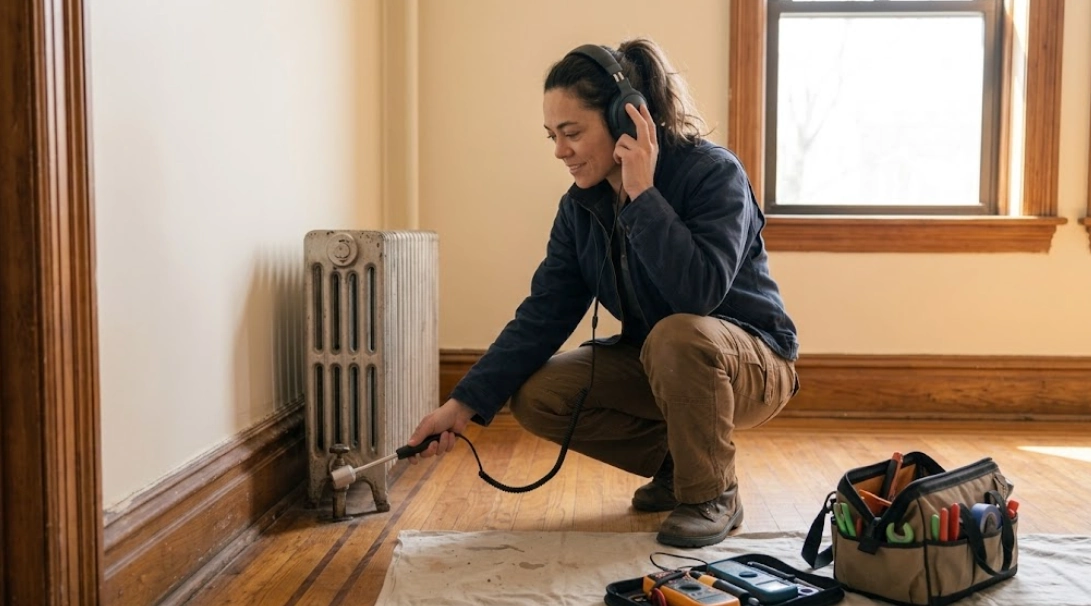
Recognizing a Hidden Water Leak in Your Manhattan Property
Concealed plumbing leaks rarely announce themselves with dramatic rushing water. More often, they begin as silent, microscopic pinholes in pressurized domestic copper lines or hairline fractures along cast-iron drainage hubs. Over weeks or months, escaped moisture seeps outward, gradually saturating masonry, joists, and finish surfaces throughout your Lower East Side residence.
Because modern building materials absorb substantial quantities of moisture before exhibiting exterior signs, visible surface damage typically represents an advanced stage of water migration. Identifying subtle warning signs early is essential to preventing extensive structural timber rot, electrical conduit damage, and secondary mold growth.
Common Visible Warning Signs
- Ceiling Staining & Discoloration: Expanding yellow, tan, or brown water rings spreading across plaster or sheetrock.
- Blistering Paint & Sagging Drywall: Moisture trapped behind latex paint causing bubble-like pockets or sagging plaster lath.
- Baseboard Swelling & Buckling Wood Floors: Hardwood floorboards cupping or dark damp borders surfacing along hallway trim.
- Persistent Musty Odors: Damp, earthy smells that remain noticeable even after thorough cleaning and ventilation.
Subtle Operational Indicators
- Unexplained Utility Meter Activity: Water meters running continuously while all unit faucets, appliances, and fixtures are fully shut.
- Unexpected Drop in Flow: Gradual loss of domestic supply pressure at showerheads or sink taps due to diversion through broken pipes.
- Localized Warm Floor Areas: Concrete slabs or tiles feeling noticeably warm underfoot, indicating a sub-floor hot water line breach.
- Sound of Running Water: A faint hissing or trickling noise heard through interior walls late at night when the building is quiet.
For detailed diagnostic evaluation of specialized residential units, our team performs targeted apartment leak detection Lower East Side Manhattan property managers and homeowners count on to prevent catastrophic structural water intrusion.
Why Leaks Can Be Difficult to Trace in Lower East Side Buildings
The architectural fabric of the Lower East Side presents unique plumbing challenges found in few other places in New York City. From pre-war five-story walkups constructed in the late 19th century to massive post-war residential towers such as the Grand Street co-ops, plumbing infrastructure is intricately layered and interconnected across multiple living units.
In older tenement buildings along streets like Delancey, Clinton, and Orchard, decades of historical retrofits mean that original galvanized water pipes frequently intermingle with later copper additions, brass nipples, and cast-iron waste lines. When a vertical riser develops a breach within an enclosed wall chase, escaped water does not simply drop straight down. Instead, it frequently travels horizontally across structural steel I-beams, follows sloping subfloor timbers, or tracks electrical conduits through multiple apartments before finally breaking through plaster two floors below and thirty feet away from the actual pipe break.
Shared Risers in Multi-Unit Co-ops & Condominiums: In complexes near Two Bridges and along Grand Street, individual apartments share vertical supply stacks and soil stacks. A wet spot showing on your living room ceiling may originate from a worn dishwasher supply hose, an uncaulked shower pan, or a corroded waste elbow in a neighboring unit on an upper level. Pinpointing the exact physical source requires calibrated diagnostic methodology rather than guessing and destructive demolition.
When searching for a concealed breach inside enclosed utility chases, property owners rely on systematic hidden water leak detection Lower East Side Manhattan diagnostics to locate the exact pipe defect without tearing down continuous rows of historical plaster.
How Professional Leak Detection Works: Diagnostic Steps
True professional leak detection is an engineering process of elimination. Rather than opening exploratory holes across walls and ceilings, qualified technicians employ non-invasive scientific instruments to locate the precise point where water escapes the pressurized supply or gravity drainage system.
-
Initial Symptom Review & Visual Survey
We review the property's leak timeline, inspection history, utility billing patterns, and building construction characteristics. A non-invasive visual survey evaluates all accessible fixtures, shutoff valves, exposed branch piping, and visible moisture boundaries.
-
Thermal Imaging & Infrared Surface Mapping
Using high-resolution infrared thermal imaging cameras, technicians scan wall cavities, subfloors, and ceiling drywall. Because evaporating and traveling water alters surface temperatures, thermal scans reveal exact hidden moisture paths and cool evaporation zones invisible to the naked eye.
-
Acoustic Sensor Tracing & Ultrasonic Frequency Analysis
Pressurized water escaping through a pinhole or cracked fitting emits distinct high-frequency vibrations as it collides with surrounding pipe walls and structural voids. Sensitive ground microphones and acoustic listening equipment amplify these sound signatures, allowing our technicians to locate the exact breach behind solid tile or plaster.
-
Precision Pressure Decay Testing
By isolating domestic hot and cold supply lines with calibrated test gauges, technicians monitor pressure integrity. If gauge pressure drops while valves remain closed, the line breach is verified, distinguishing supply pipe failures from intermittent drain leaks or condensation issues.
-
Findings Report & Repair Recommendations
Once the failure site is accurately marked, we explain our physical findings, detail the underlying pipe conditions, and outline targeted repair options. This comprehensive clarity protects your property finishes and gives building managers the objective data needed to coordinate work.
Leaks Between Apartments and Ceiling Leak Resolution
Few plumbing situations cause as much stress in Manhattan residential living as a ceiling leak repair Lower East Side Manhattan incident where water drips down from an overhead apartment. When ceiling paint sags or brown stains spread over your kitchen or bathroom, resolving the failure requires prompt, courteous multi-party coordination.
In co-op and condominium buildings, clear protocols govern plumbing responsibility. Typically, vertical risers and main branch connections located behind common walls fall under building corporation jurisdiction, while fixture connections, appliance hoses, and secondary supply lines remain the proprietary responsibility of individual unit owners. Determining which category an active leak belongs to requires verified physical diagnosis.
Handling Water from an Overhead Unit
If you experience an active water leak from upstairs apartment Lower East Side Manhattan emergency, take these immediate protective actions:
- Politely inform your upstairs neighbor so they can inspect their bathroom fixtures and pause running water.
- Notify your building superintendent or managing agent immediately to log the event and access shared riser shutoffs if necessary.
- Relocate furniture, electronics, and rugs away from the drip zone to mitigate property damage.
- Photograph and record video clips of active dripping, water pooling, and ceiling stains for documentation.
Locating Leaks Inside Wall Cavities
When pipes fail inside common chases, our technicians conduct targeted leak in wall detection Lower East Side Manhattan assessments. We pinpoint whether moisture originates from:
- Worn tub overflow gaskets or failing shower pan membranes.
- Pressurized hot or cold domestic riser pipe pinhole leaks.
- Corroded vertical cast-iron hub connections or cracked drain tees.
- Condensation forming on uninsulated cold water risers during humid summer months.
What Affects Leak Detection and Repair Costs
Because every plumbing infrastructure layout across the Lower East Side is unique, diagnostic and repair costs depend on several objective physical factors rather than flat rates. Reputable plumbing contractors evaluate these variables before performing invasive work:
- Accessibility of the Plumbing Line: Leaks located beneath accessible kitchen sink cabinets or exposed basement headers require less diagnostic labor than pipes concealed behind historical bathroom marble, poured concrete slabs, or multi-layer plaster walls.
- Building Construction & Pipe Age: Investigating a leak in a modern condominium with individual PEX manifold distribution differs significantly from tracing water traveling through century-old galvanized lines in a pre-war walkup.
- Diagnostic Technology Required: Straightforward pressure drop testing on an isolated branch involves fewer resources than extensive acoustic mapping combined with thermal imaging across multiple vertical apartment tiers.
- Scope of the Subsequent Repair: Once a leak is pinpointed, repairing a single localized copper fitting differs substantially from replacing an entire corroded vertical riser segment that has reached the end of its serviceable lifespan.
We believe in upfront, transparent communication regarding the inspection steps necessary for your specific building layout without inflated claims or artificial pricing schemes.
Related Plumbing Services for Lower East Side Properties
Accurate leak detection is the vital first step toward restoring plumbing integrity. Once the exact source of water loss is isolated, our diagnostic team supports Manhattan property owners with a complete suite of specialized plumbing repairs:
Pipe Leak Repair
When an acoustic or thermal inspection confirms a ruptured supply line or leaking joint, our targeted pipe leak repair service addresses localized copper, brass, and cast-iron pipe damage quickly and cleanly to prevent structural water damage.
Repiping Services
If your building suffers from chronic recurring pinholes, rusty water, or severely degraded galvanized lines, explore full or partial repiping solutions engineered to modernize residential risers and branch lines for decades of reliable service.
Water Heater Repair
Water pooling around a mechanical room or utility closet often originates from a failed water heater tank, temperature relief valve, or loose connection. Learn how our water heater repair restores reliable domestic hot water safely.
Boiler Repair
Unexplained heating system pressure loss and water puddling near heating equipment frequently stem from steam or hydronic boiler malfunctions. Review our expert boiler repair diagnostics for Lower East Side heating plants.
Gas Line Repair & Inspection
Gas piping concerns require rigorous safety protocols distinct from domestic water systems. Our qualified technicians perform code-compliant gas line repair & inspection, Local Law 152 testing, and appliance hookups with unmatched care.
Drain Cleaning
Slow fixtures, kitchen grease blockages, and main line backups can mimic pressurized supply leaks when waste water backs up into walls. Discover our professional drain cleaning and mechanical snaking solutions.
Backflow Testing
Protecting potable drinking water from hazardous cross-connections is mandatory across New York City commercial and multi-family properties. Learn more about annual backflow testing, certification, and valve maintenance.
Preventing Recurring Plumbing Leaks in Manhattan Properties
Proactive building maintenance is the most effective safeguard against devastating water damage. Manhattan property owners, co-op board directors, and tenants can implement several straightforward preventative habits:
- Conduct Regular Visual Inspections: Periodically examine under-sink cabinets, washing machine hoses, toilet supply connections, and water heater bases for green copper oxidation, rust flakes, or calcified mineral crusts.
- Know Your Main Shutoff Valves: Ensure all household members and building staff know the exact location of emergency quarter-turn ball valves for individual fixtures and main apartment risers.
- Monitor Water Pressure: Excessive municipal street water pressure exceeding 75 to 80 PSI strains pipe joints, appliance solenoid valves, and flexible supply hoses. Installing a calibrated pressure-reducing valve (PRV) protects plumbing infrastructure.
- Address Slow Drains Promptly: Standing water in acidic grease-laden kitchen waste lines accelerates pipe wall thinning in older cast-iron and galvanized branch pipes.
Whether you require scheduled preventative inspections or immediate leak detection near Two Bridges or leak detection near Grand Street co-ops, our local Lower East Side plumbing specialists are ready to assist.
Frequently Asked Questions About Leak Detection
Explore answers to common questions regarding water leak investigation in Lower East Side apartments and multi-unit buildings:
When water drips from a ceiling or pools along the upper perimeter of a wall in a multi-story building, it typically originates from a fixture, drain trap, or riser pipe on a floor above. Because water travels along concrete slabs and steel framing, the visible drip may not sit directly below the actual pipe breach, requiring coordinated moisture assessment.
Yes. Non-invasive electronic leak detection employs acoustic listening sensors, high-resolution infrared thermal imaging cameras, and calibrated moisture meters to isolate water escape points behind plaster, drywall, or tile without broad demolition.
Immediately place a bucket beneath the drip to catch falling water and protect flooring. If paint is bulging with water, carefully puncture the center with a screwdriver to release pressure and prevent ceiling collapse. Alert your upstairs neighbor and building superintendent immediately, then contact a leak detection professional.
Yes. A continuous pressurized supply-line pinhole leak hidden behind drywall or subflooring discharges water 24 hours a day. In individually metered apartments or commercial properties, this constant loss causes an unexpected spike on utility bills before visible stains develop.
You should arrange an inspection as soon as you detect persistent musty odors, bubbling paint, peeling baseboards, warm floor spots, unexplained water meter movement, or recurrent ceiling discoloration.